 Skip to content

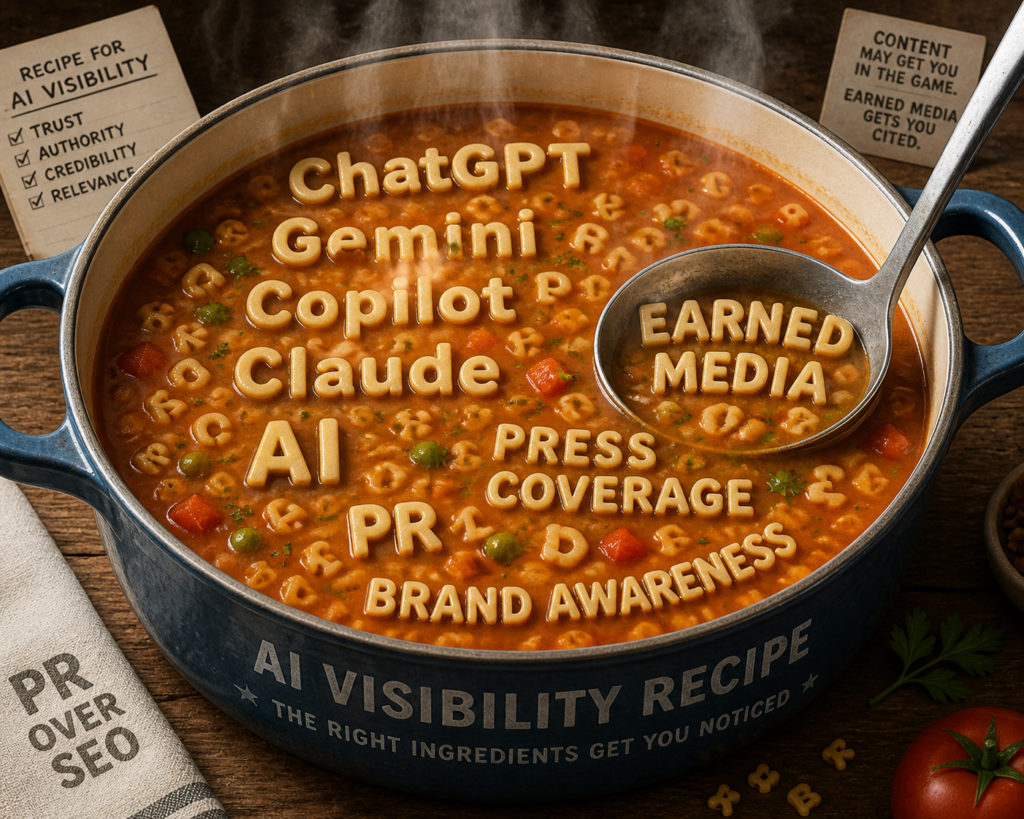
Earned media has rapidly evolved from a top-of-funnel awareness driver into one of the most important inputs powering generative engine optimization, GEO, and AI search. As users shift from clicking links to consuming synthesized answers, the sources that inform those answers have become the new battleground for visibility. AI models are not simply retrieving information; they are prioritizing what they consider credible, corroborated, and authoritative. Earned media, by definition, delivers exactly that: third-party validation from trusted publications, journalists, and experts. As a result, it has emerged as one of the most influential citation sources shaping how brands appear in AI-generated responses.
This shift reframes how brand authority is built. In traditional SEO, owned content and backlinks could be engineered to influence rankings. In AI search, however, models lean heavily on patterns of credibility derived from independent news coverage. A feature in a respected outlet, a quote from a recognized expert, or consistent inclusion in industry reporting creates a network of signals that AI systems interpret as trust. These signals do not just improve brand visibility; they directly impact whether that brand is cited, referenced, or included at all. In this environment, earned media is not supplemental to search strategy; it is foundational to being recognized by AI.
Across leading AI platforms, including ChatGPT, Gemini, Claude, and Microsoft Copilot, earned media consistently rises to the top as a preferred and frequently cited source type. While each model approaches retrieval and synthesis differently, they all converge on the same principle: independent, editorially vetted content is more trustworthy than self-published material. That trust translates directly into citations, inclusion, and ultimately, brand discovery.
Below is our breakdown of ChatGPT, Gemini, Claude, and Copilot as they relate to earned media.
ChatGPT
Within ChatGPT, earned media plays a central role in shaping both inclusion and citation. The model synthesizes answers based on patterns of authority and trust learned from a vast corpus of information, and third-party coverage is one of the strongest indicators of both. When ChatGPT draws on retrieved content, it tends to prioritize reputable publications, meaning earned media is disproportionately represented among the sources it references. Even when explicit citations are not shown, the model’s outputs are heavily influenced by narratives established in credible media coverage.
From a GEO perspective, this makes earned media a primary driver of brand visibility. Companies that are consistently featured in respected outlets create a recognizable footprint that the model can confidently reference. These mentions function as citation anchors, increasing the likelihood that a brand will appear in answers to relevant queries. Without this layer of validation, brands are far less likely to be surfaced, regardless of their owned content or paid presence.
Credibility within ChatGPT is tightly linked to editorial validation. The model implicitly trusts sources that demonstrate journalistic rigor, and earned media provides that signal at scale. As a result, brands with strong PR footprints are not only more likely to be included; they are more likely to be framed positively and authoritatively within responses.
Gemini
Gemini’s integration with Google’s search infrastructure makes earned media one of the most visible and frequently cited source types in its outputs. Because Gemini relies on Google’s indexing and ranking systems, it inherits a strong bias toward authoritative, high-quality content, precisely the type produced through earned media. Articles from established publications are more likely to rank highly, be selected for AI summaries, and be directly cited in responses.
This creates a powerful advantage for brands with robust earned media coverage. Each placement in a credible outlet not only strengthens SEO signals like authority and trust, it also increases the likelihood of being cited within AI-generated answers. In many cases, Gemini explicitly links to these sources, making earned media the bridge between discovery and traffic.
Additionally, Gemini’s reliance on entity recognition amplifies the impact of earned media. Consistent coverage across reputable publications helps Google validate and understand a brand as a distinct entity. These corroborated references become the foundation for inclusion in knowledge graph results and AI summaries, reinforcing earned media as a primary citation pathway.
Claude
Claude’s emphasis on reliability and grounded reasoning elevates the importance of earned media as a trusted source. The model is designed to favor information that reflects consensus and verifiability, which naturally aligns with editorially vetted coverage. As a result, earned media becomes one of the most influential inputs shaping Claude’s responses, even when citations are not explicitly displayed.
From a discovery standpoint, this means that brands must be present in credible, third-party sources to be considered at all. Claude is less likely to rely on promotional or self-published content, instead favoring information that has been independently validated. Earned media serves as that validation layer, effectively acting as a gatekeeper for inclusion.
While Claude’s citation style is more implicit, the hierarchy of sources it relies on still prioritizes earned media. The narratives, language, and associations present in high-quality coverage directly inform how the model describes and positions brands. In this way, earned media shapes not only whether a brand is included but also how it is characterized.
Microsoft Copilot
Microsoft Copilot offers the most transparent view into the role of earned media as a citation source. Because it integrates real-time web retrieval through Bing, it frequently surfaces and links directly to the sources it uses. In practice, these sources are authoritative publications, making earned media one of the most commonly cited content types in Copilot responses.
This dynamic creates a direct line between PR and AI visibility. When a brand secures coverage in a high-quality outlet, that content becomes eligible for immediate inclusion and citation in Copilot’s answers. The result is measurable; earned media does not just influence visibility, it drives clickable citations that reinforce credibility and generate traffic.
Copilot’s reliance on source selection also underscores the importance of domain authority. Publications with strong reputations are more likely to be chosen, meaning that the quality of earned media placements matters as much as the quantity. Brands that invest in top-tier coverage position themselves to be consistently cited, referenced, and recommended within AI-driven interactions.
As AI becomes the dominant interface for search and discovery, earned media has emerged as the leading source of truth that these systems rely on and cite. Across ChatGPT, Gemini, Claude, and Microsoft Copilot, the pattern is clear: independently validated, editorially rigorous coverage fuels inclusion, shapes narratives, and drives citations. For brands, visibility in AI is no longer won through owned content alone; it is earned through credible third-party recognition.
This is where working with a specialized PR partner becomes critical. Public relations agencies like BIG FISH PR are built to secure the kind of high-quality earned media that AI models trust and cite. By consistently placing brands in authoritative outlets, developing thought leadership, and aligning coverage with GEO strategies, they help transform PR from a communications function into a core driver of AI-era discovery. In a landscape where citations are currency, earned media is the asset, and the right PR strategy is how brands win.
