 Skip to content

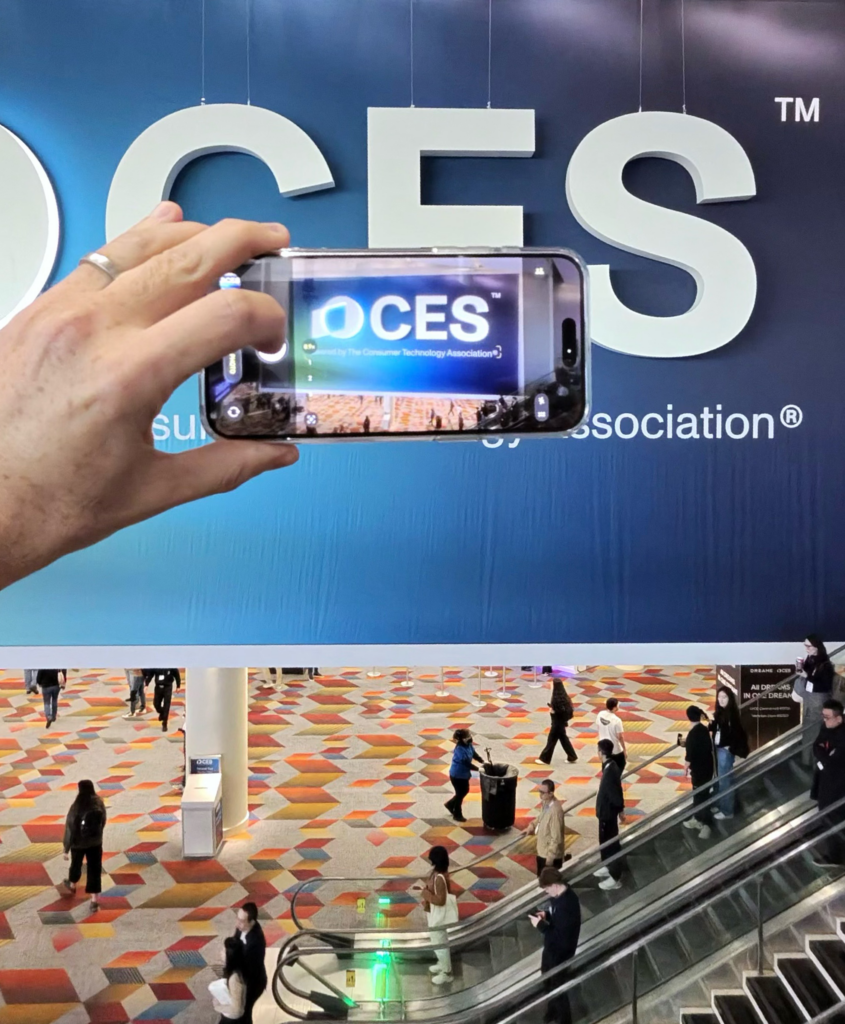
BIG FISH PR has been launching and representing brands at CES for nearly two decades. Our first show was in 2006, and year after year, CES has continued to deliver a front-row seat to what consumer technology is today, and where it’s headed next. CES 2026 was no exception. This year, the BIG FISH team supported the launch of a brand-new company that walked away with close to a dozen awards (more on that soon), worked with a Fortune 50 leader, and represented a range of highly innovative brands in between. We logged miles across the show floor, from Eureka Park at the Sands to the biggest global players anchoring Central Hall. What follows is our take on what stood out, and what it all means for the year ahead.
CES 2026 made one thing immediately clear: technology is no longer content to live quietly behind screens. The show signaled a decisive shift toward physical, embodied, and ambient intelligence, technology that moves, sees, listens, and acts in the real world. This year felt less like a traditional gadget showcase and more like a preview of how AI, robotics, and connected systems will shape everyday life in meaningful, tangible ways.
Robotics dominated the conversation, particularly humanoid robots that have finally moved beyond spectacle and into early-stage practicality. Rather than theatrical demos designed to turn heads, companies focused on balance, dexterity, and task execution. These robots were positioned not as companions or curiosities, but as future coworkers, designed for factories, warehouses, and logistics environments where labor shortages, efficiency, and safety are real business drivers. CES 2026 reframed robotics as a coming reality, not science fiction.
At the consumer level, early-stage helper robots offered a glimpse into how automation may eventually enter the home. While still limited and premium-priced, these devices showed credible progress in handling basic tasks and integrating with broader smart home ecosystems. The implication was clear: today’s voice assistants are laying the groundwork for tomorrow’s mobile, task-oriented home AI, even if widespread adoption remains a few years away.
Artificial intelligence itself was omnipresent, but notably understated. At CES 2026, AI was rarely positioned as a headline feature. Instead, it was embedded into products that simply worked better. Vacuums navigated complex spaces with ease, earbuds filtered noise while transcribing conversations in real-time, and everyday devices adjusted behavior based on context rather than commands. The takeaway for the year ahead is clear: AI is becoming infrastructure, not a novelty.
Wearables reflected this same evolution. Fitness tracking took a back seat to intelligence focused on communication, translation, and situational awareness. AI-powered glasses and discreet wearable assistants pointed toward a future where information appears when it’s needed, without demanding constant attention. Rather than pulling users deeper into screens, these devices aim to augment reality itself, a shift that could finally move wearables into broader cultural relevance.
Despite all the momentum around AI and autonomy, display technology remained a quiet cornerstone of the show. TVs, monitors, and immersive displays delivered meaningful gains in brightness, efficiency, and clarity, reinforcing the central role visual experiences play in work, gaming, and entertainment. The difference in 2026 was intent: screens are no longer passive endpoints, but interactive interfaces for intelligent systems that respond dynamically to users.
Smart home technology also showed signs of maturity. Interoperability and reliability replaced gimmicks as manufacturers embraced shared standards and practical automation. Instead of showcasing fragmented point solutions, brands focused on homes that anticipate behavior, adjusting lighting, climate, safety, security (ring), and appliances seamlessly in the background. The next phase of smart home tech will be defined less by control and more by quiet orchestration.
Health and wellness technology continued its steady move into the mainstream, blending sensors, AI, and thoughtful design into tools that feel more like lifestyle products than medical devices. Non-invasive health tracking and personalized insights reflected a growing consumer appetite for preventative, data-driven care. In the year ahead, health tech will increasingly live alongside everyday consumer electronics rather than apart from them.
Mobility and automotive technology struck a more measured tone. While bold promises around full autonomy were tempered, progress in driver-assistance systems, safety features, and AI-driven vehicle software was unmistakable. Cars were positioned as evolving platforms, machines that improve over time, signaling that real innovation will come through iteration, not overnight breakthroughs.
Taken together, CES 2026 painted a picture of an industry entering a more grounded, execution-focused phase. The excitement wasn’t about what might be possible someday, but about what is becoming usable now. The year ahead will be defined by smarter machines, devices, and systems, quieter intelligence, and deeper integration into physical spaces. As AI steps off the screen and into the world, success will hinge not just on innovation, but on trust, restraint, and real-world value.
And this is where experience matters. After nearly 20 years of launching and representing brands at CES, BIG FISH PR knows what it takes to cut through the noise. Successful CES PR campaigns are built early, anchored by a clear narrative, and designed for earned media, not booth traffic alone. Brands that win at CES lead with a strong point of view, prioritize press relationships over gimmicks, and align announcements with broader tech and cultural trends. CES rewards preparation, clarity, and confidence, and when executed correctly, it remains one of the most powerful stages in the world for consumer technology brands.
