 Skip to content

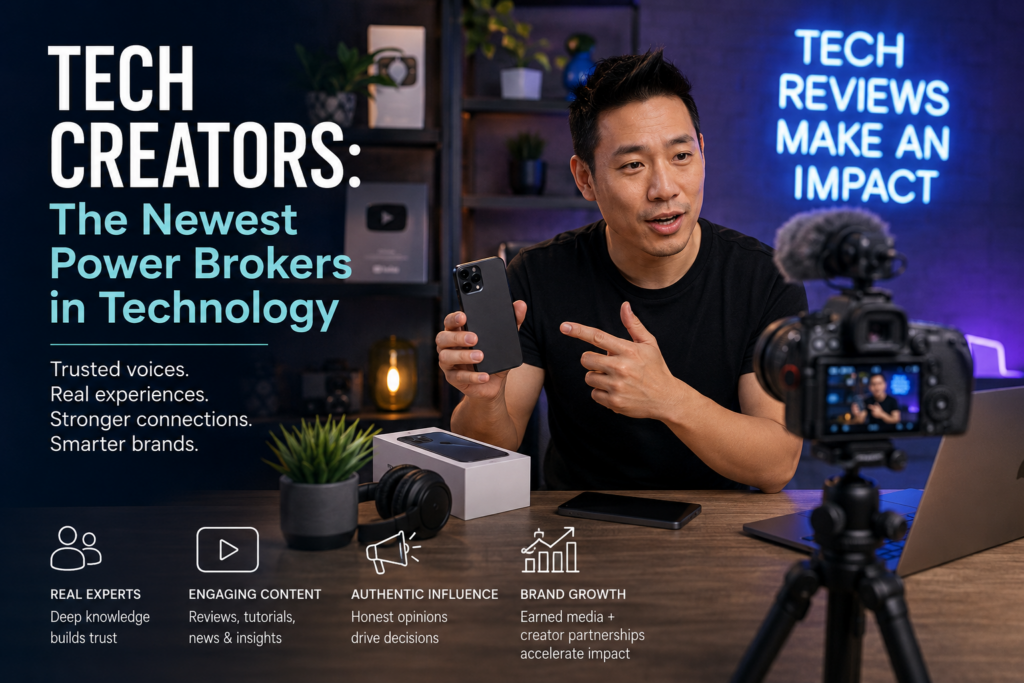
The technology industry has undergone a dramatic transformation in how brands reach and influence consumers. Traditional advertising campaigns and polished corporate messaging no longer hold the same authority they once did. Today’s decision-makers increasingly rely on trusted voices from tech creators, also known as tech UGC creators, tech influencers, digital reviewers, and technology educators, to guide purchasing decisions and shape perceptions of emerging products and innovations.
These creators have become one of the most influential forces in modern public relations, particularly across consumer electronics, smart home technology, artificial intelligence, drones, wearables, software, gaming, and connected devices.
Tech creators are digital storytellers who bridge the gap between complex technology and everyday consumers. They create content across YouTube, TikTok, Instagram, LinkedIn, podcasts, newsletters, and emerging creator platforms, helping audiences understand everything from product functionality to long-term usability. Their content ranges from smartphone reviews and smart home demos to AI tutorials, drone flight testing, cybersecurity explainers, and software walkthroughs. What makes these creators uniquely valuable is their ability to translate highly technical concepts into authentic, engaging, and relatable content.
Unlike traditional celebrity influencers, tech creators are respected because of their expertise rather than their lifestyle. Many come from engineering, gaming, software development, IT, production, or enthusiast communities. Their audiences trust them because they demonstrate deep product knowledge, conduct hands-on testing, and provide nuanced opinions that feel honest rather than scripted. In a marketplace crowded with marketing claims, authenticity has become one of the most valuable forms of influence.
YouTube remains one of the dominant platforms for long-form tech content. Tech creators publish detailed reviews, unboxings, comparisons, benchmark testing, tutorials, and industry commentary that can collectively generate millions of views. Meanwhile, TikTok and Instagram have accelerated the rise of short-form tech education, where creators quickly explain features, hacks, AI applications, or hidden product benefits in highly engaging formats. Together, these platforms create an always-on ecosystem of technology discovery and validation.
The creator economy itself is also evolving rapidly. Audiences are increasingly gravitating toward niche subject-matter experts rather than broad lifestyle influencers. Consumers want creators who genuinely understand categories like gaming PCs, smart security systems, robotics, wearable health technology, EV charging, or enterprise AI tools. As a result, brands are shifting away from investing heavily in a handful of mega influencers and instead building portfolios of specialized creators who collectively deliver stronger engagement, deeper trust, and more authentic audience relationships.
This shift has fundamentally changed how successful technology brands approach communications and earned media. Today’s most effective campaigns focus on storytelling, education, and meaningful product experiences that creators genuinely want to discuss. The strongest creator relationships are built on transparency and access rather than rigid scripts or transactional sponsorships. Audiences can quickly identify overly polished endorsements, while creators who openly discuss both strengths and limitations often build stronger credibility and influence.
For brands navigating this landscape, boutique public relations agencies have become increasingly valuable strategic partners. Agencies like BIG FISH PR help high-growth technology brands build authentic relationships with journalists, news outlets, analysts, and creators through thoughtful storytelling and strategic earned media campaigns. Rather than relying solely on paid advertising, boutique agencies focus on positioning brands within larger industry conversations and developing narratives that creators organically want to engage with and amplify.
A modern earned media strategy starts with identifying the right creator voices. Not every creator is a fit for every brand. The most successful partnerships come from aligning products with creators whose audiences naturally overlap with the brand’s target market. A smart home company, for example, may see stronger results partnering with creators focused on home automation, security, family life, or energy efficiency than with a broad technology influencer who has a larger but less targeted audience.
Another critical element is giving creators the freedom to share lived experiences rather than scripted endorsements. Consumers increasingly value transparency and real-world product usage over polished talking points. Whether documenting how a wearable improved sleep tracking, testing a drone in difficult conditions, or integrating smart home devices into daily routines, creators build stronger audience trust when their experiences feel genuine and unscripted.
The rise of algorithm-driven discovery has also transformed content strategy. TikTok, Instagram Reels, and YouTube Shorts now prioritize engaging content regardless of whether viewers follow the creator. As a result, brands must focus less on follower counts and more on producing useful, educational, or entertaining content that resonates with broader audiences. Product education, tutorials, problem-solving, and comparison content consistently outperform direct promotional messaging because they immediately deliver value.
This is where boutique agencies with earned media expertise can create significant long-term value. Agencies like BIG FISH PR understand how to position products within broader cultural and industry trends, helping creators develop stories that resonate naturally with audiences. Rather than forcing promotional campaigns, they help brands uncover narratives around innovation, wellness, productivity, sustainability, AI transformation, family life, or security — themes that generate stronger creator engagement and broader media momentum.
For both emerging startups and established technology brands, creator relationships can be transformative. A thoughtful creator strategy can help explain complex technologies, introduce entirely new product categories, generate credibility, and accelerate consumer adoption. Combined with earned media placements in major publications, podcasts, broadcast segments, and industry conversations, creator engagement becomes part of a much larger brand visibility engine.
As the creator economy continues to mature, tech creators will play an even larger role in shaping how consumers discover, evaluate, and trust technology products. They are no longer simply influencers promoting gadgets online. They are educators, analysts, storytellers, reviewers, and cultural interpreters helping audiences navigate an increasingly complex digital world. For brands willing to prioritize authenticity, expertise, and long-term relationship building, the combination of creator engagement and strategic earned media offers one of the most powerful opportunities in modern communications.
